
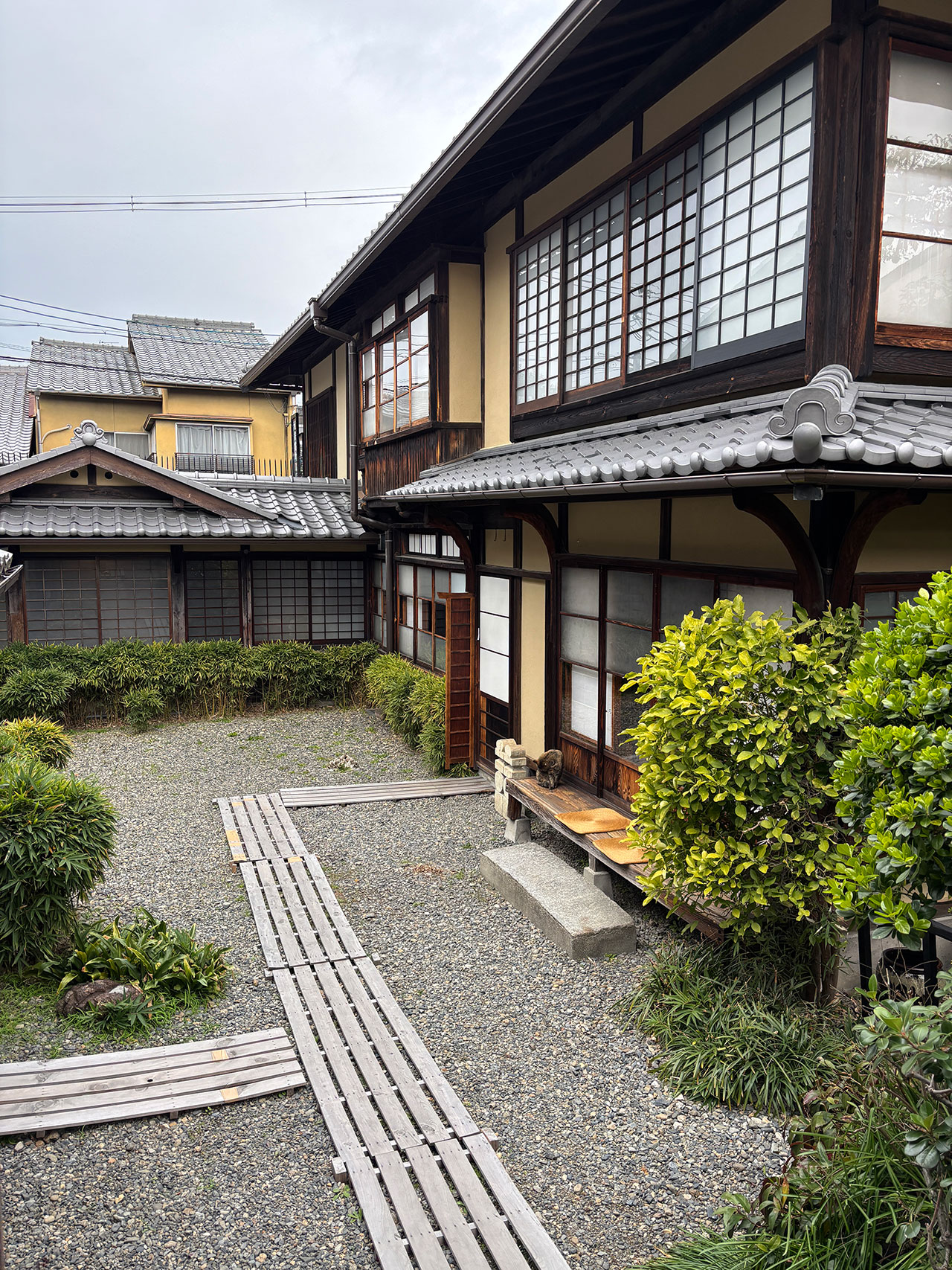
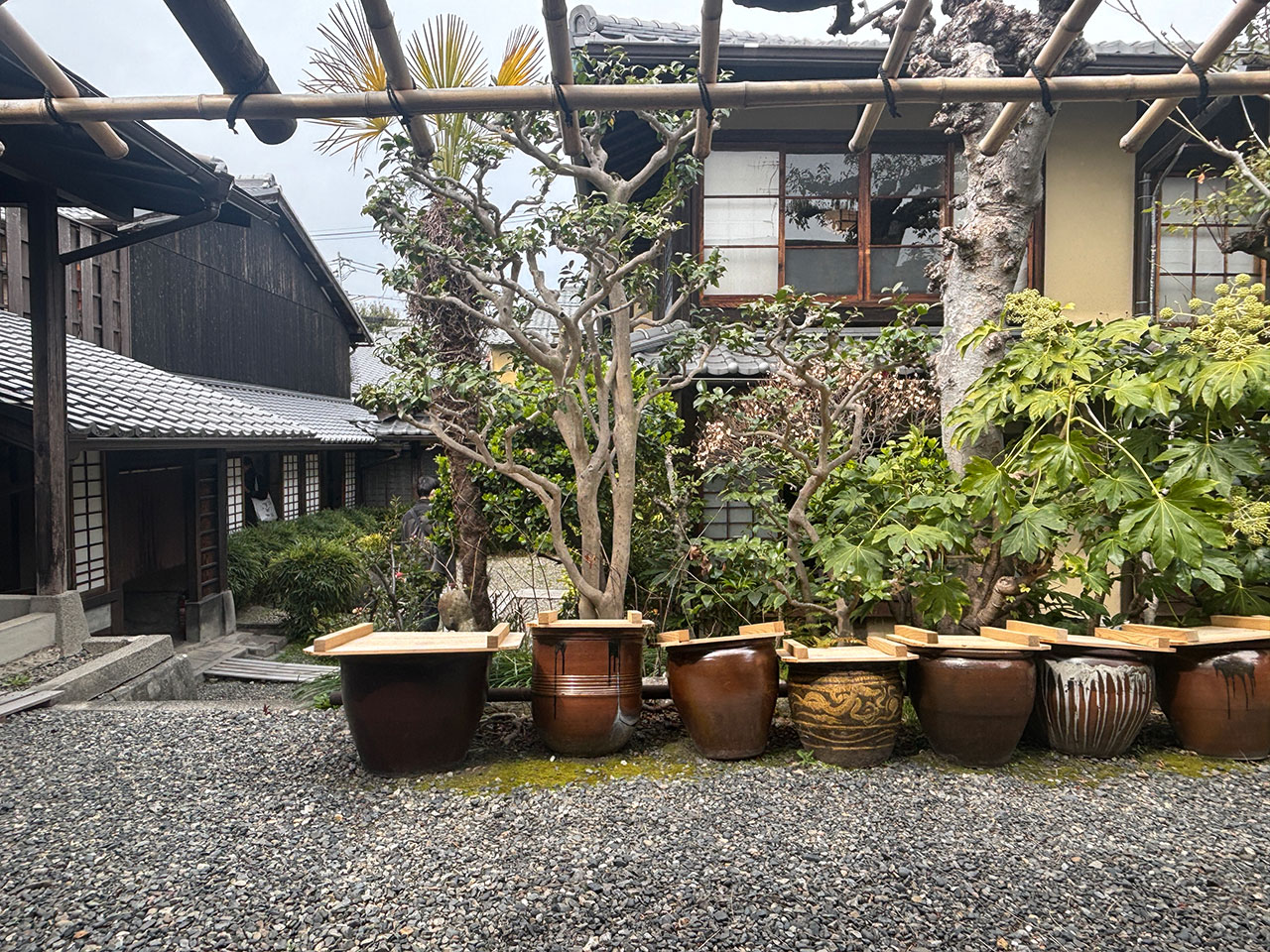
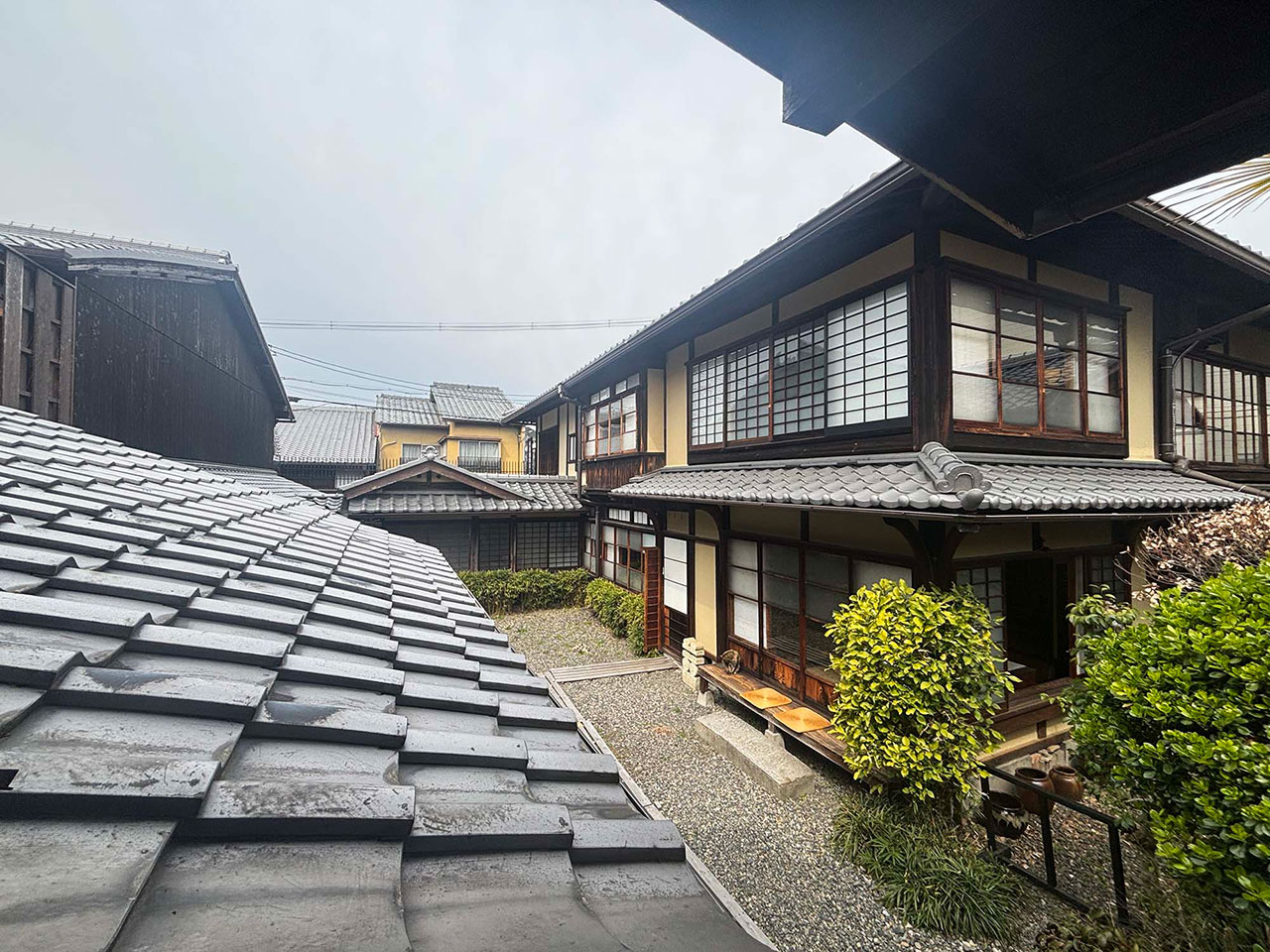
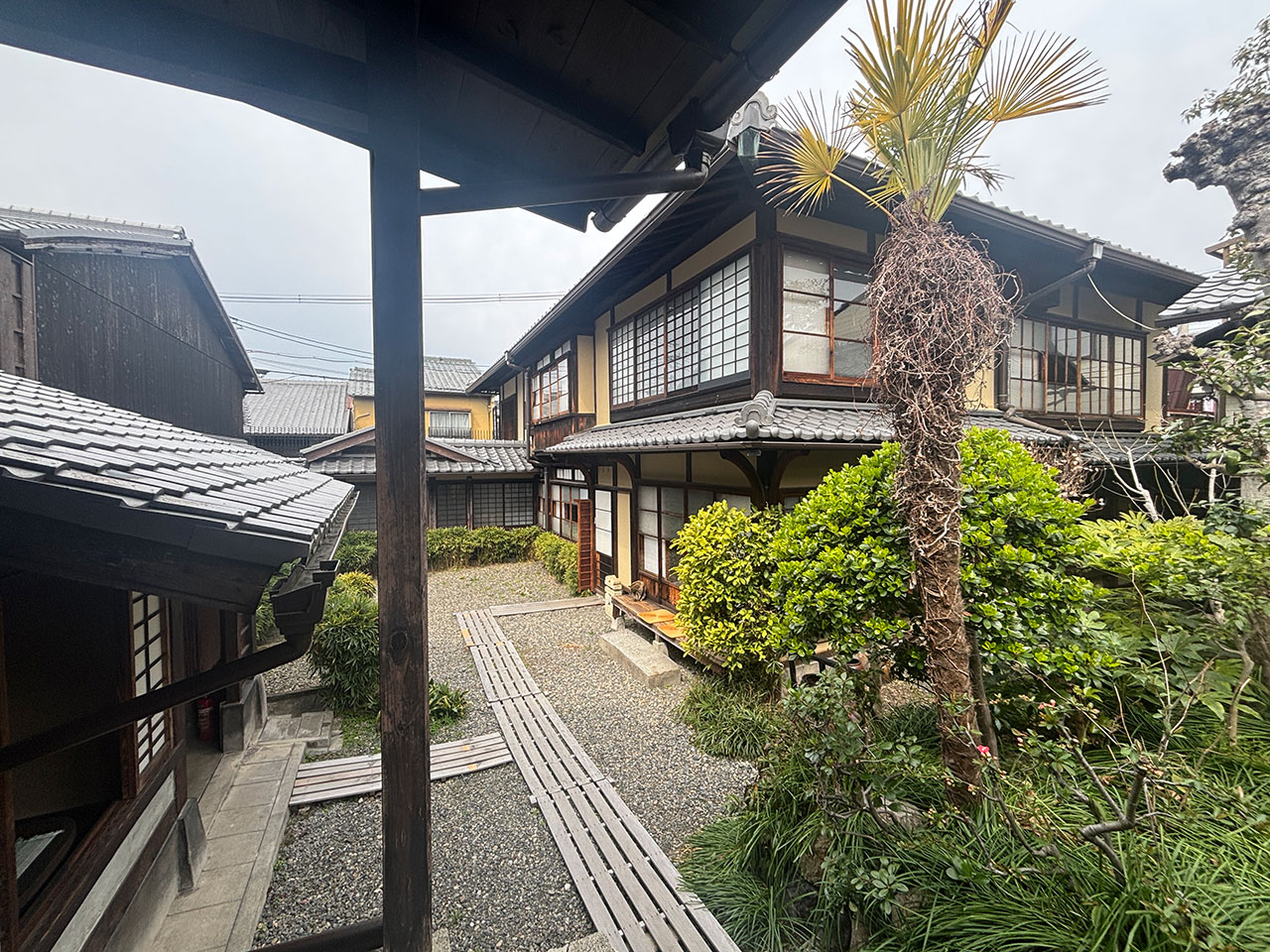
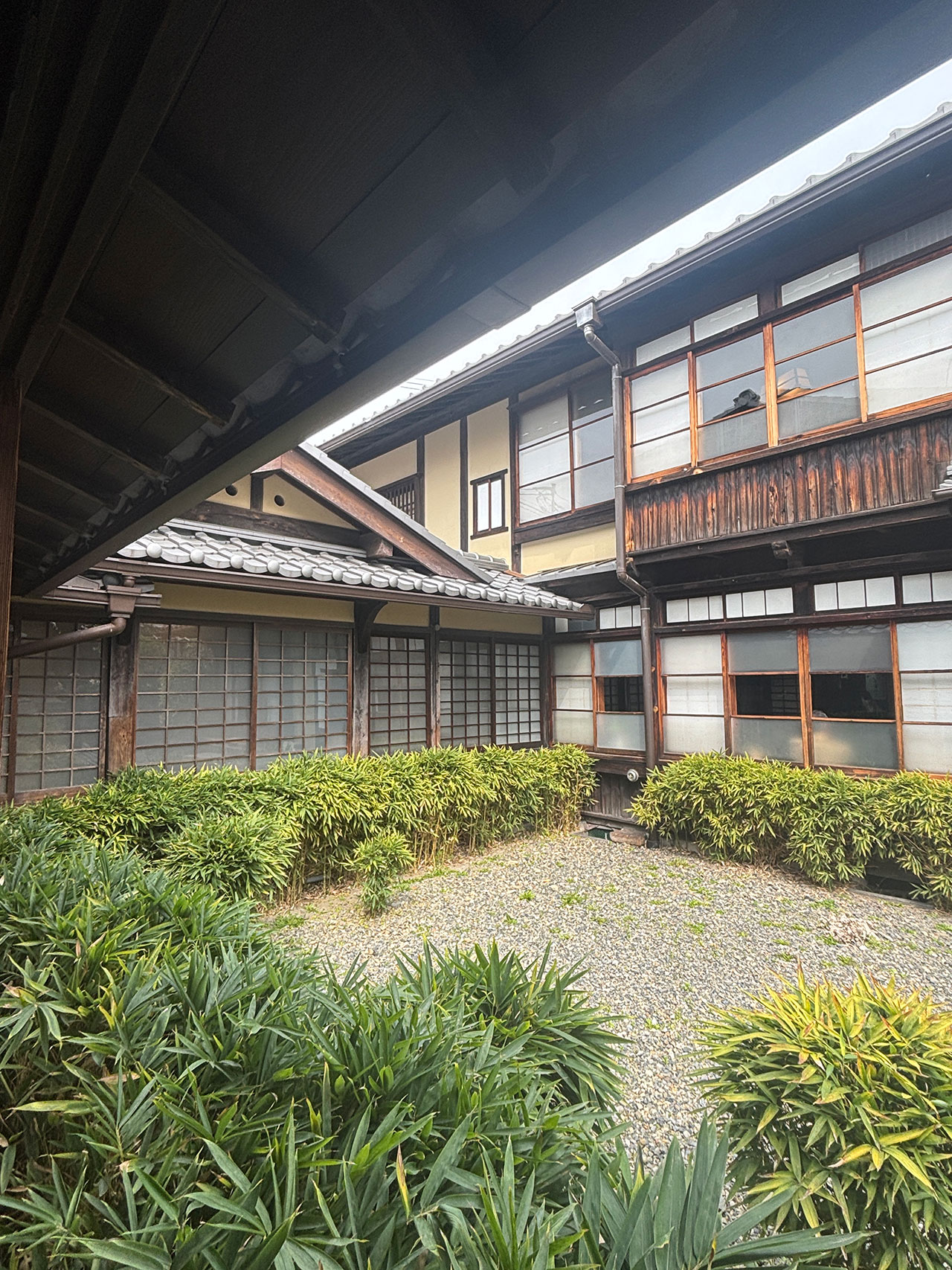
I walked past Kawai Kanjirō’s house and studio twice before I found the door I was looking for. Located on a quiet side street in Kyoto, the unassuming museum dedicated to the life and work of the influential folk potter blends in with all the other machiya townhouses typical of the city, with the metallic sheen of its kawara roof tiles, dark wood latticed windows, and curved bamboo inuyarai screens extending from the plastered facade to the sidewalk. I’m sure that if I could read Japanese, the distinctive wood sign—carved by Living National Treasure Kuroda Tatsuaki—proclaiming the name of the museum would have caught my eye. Otherwise, only a small plaque by the door reads in English: “Kawai Kanjirō’s House Entrance.”
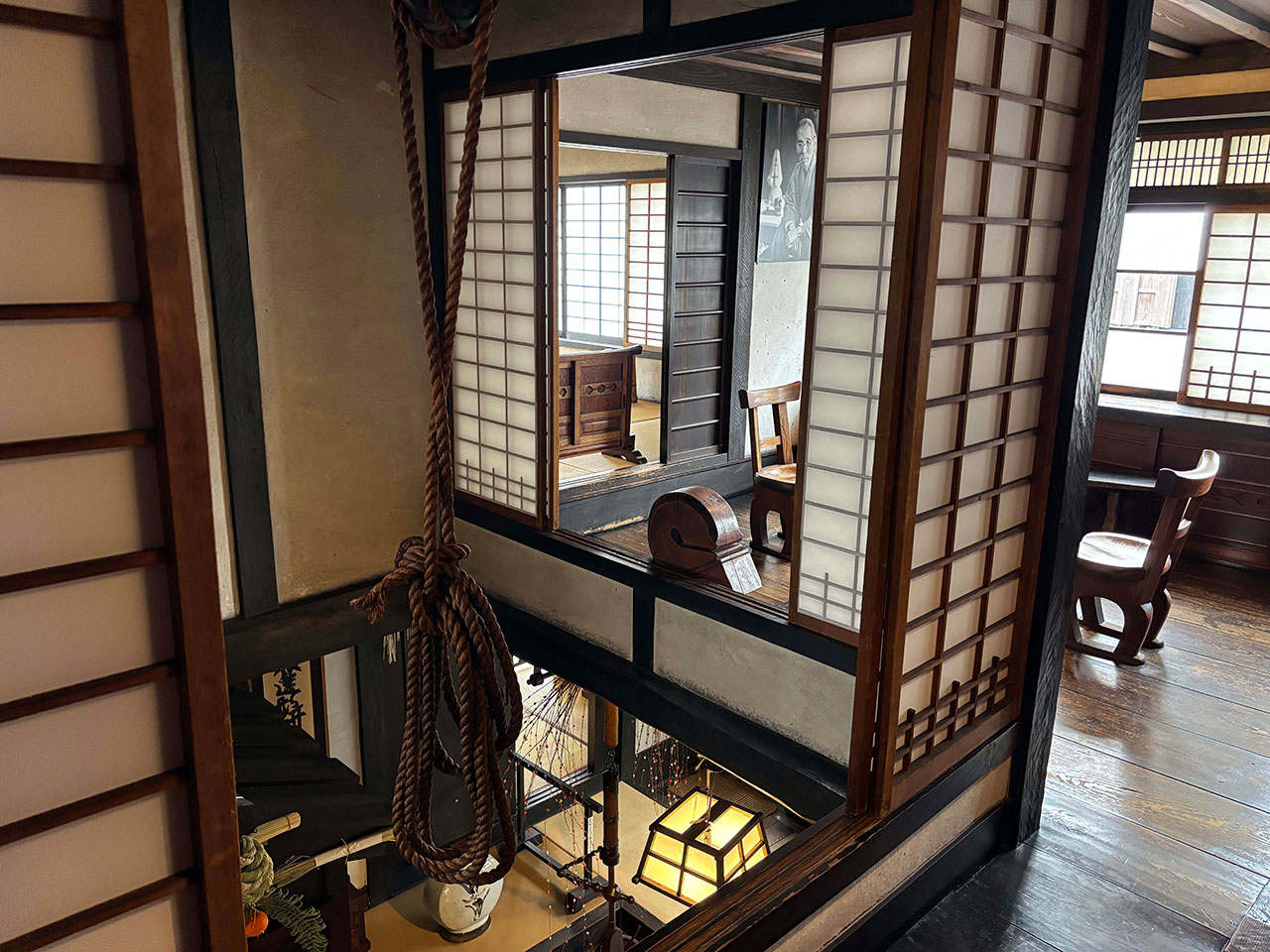
I carefully slid open the wooden door and stepped inside, taking note of the shoes-off etiquette as my eyes adjusted to the dark room. To my right, I was greeted by a carved wooden sculpture of a hand, index finger pointing to the sky — a piece that foreshadows the mystical quality that the home, and all of Kanjirō’s work, seems to emanate. I stashed my sneakers in a cubby at the door and slipped into a pair of communal house shoes before being warmly welcomed in.
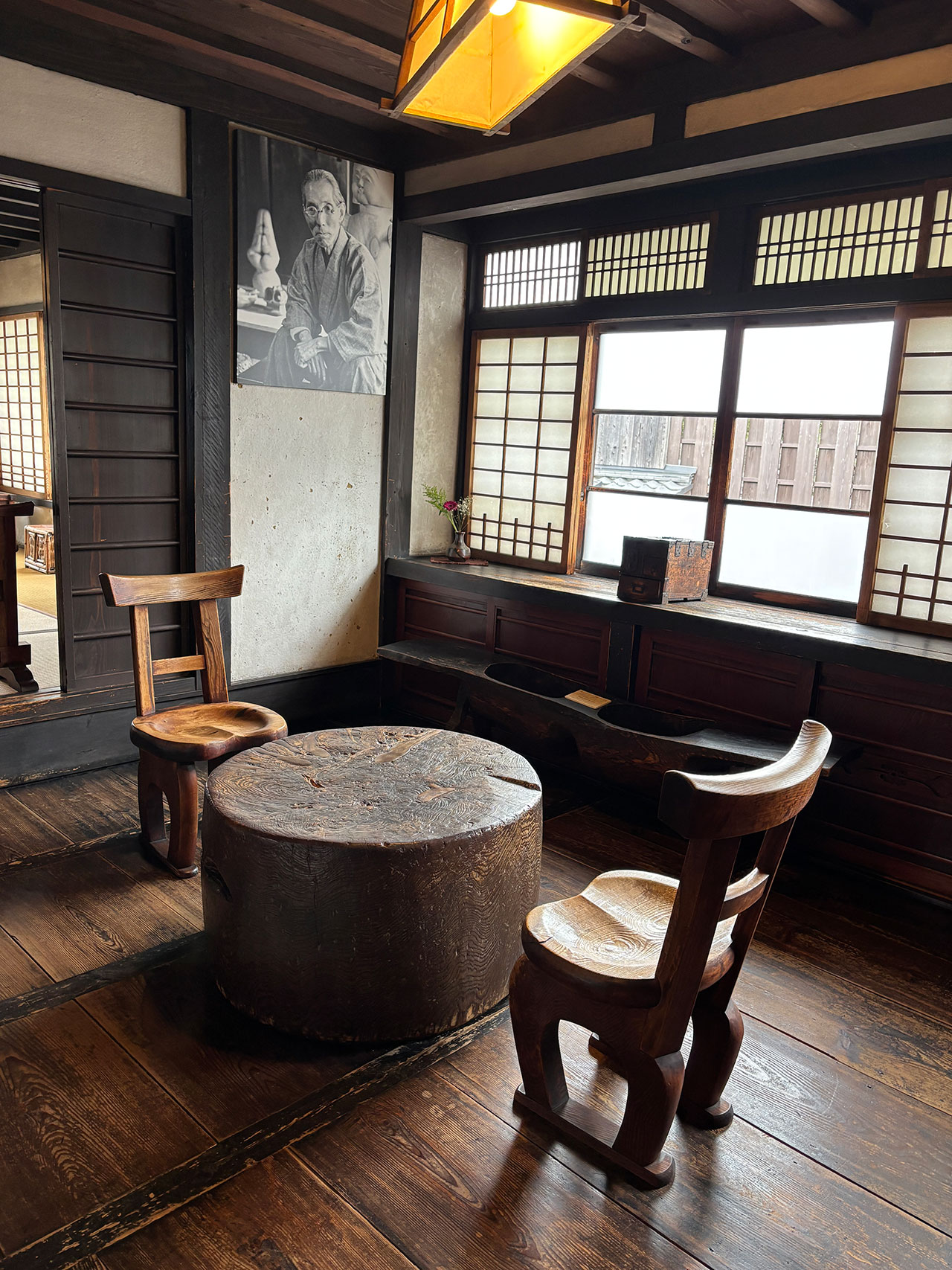
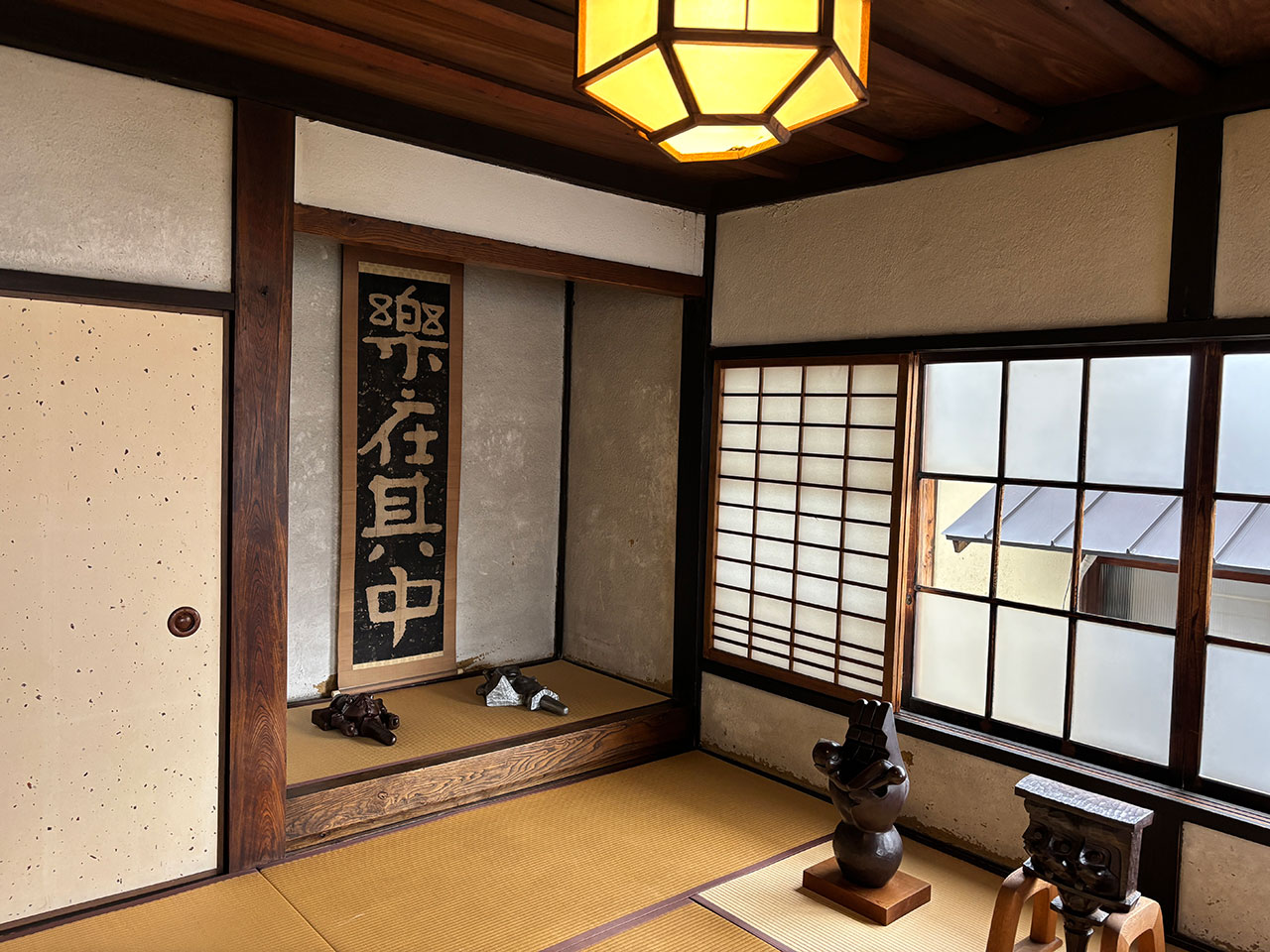
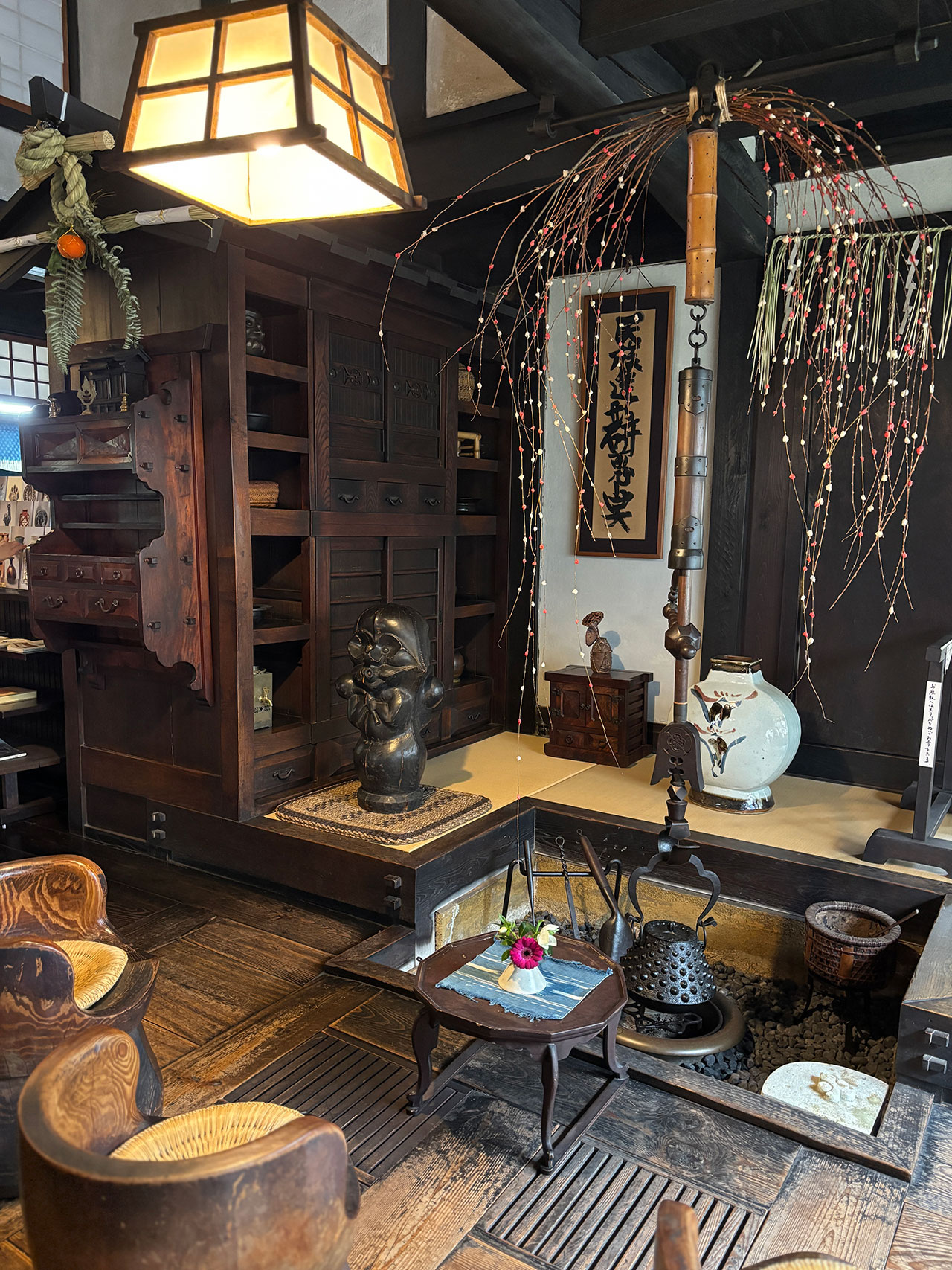
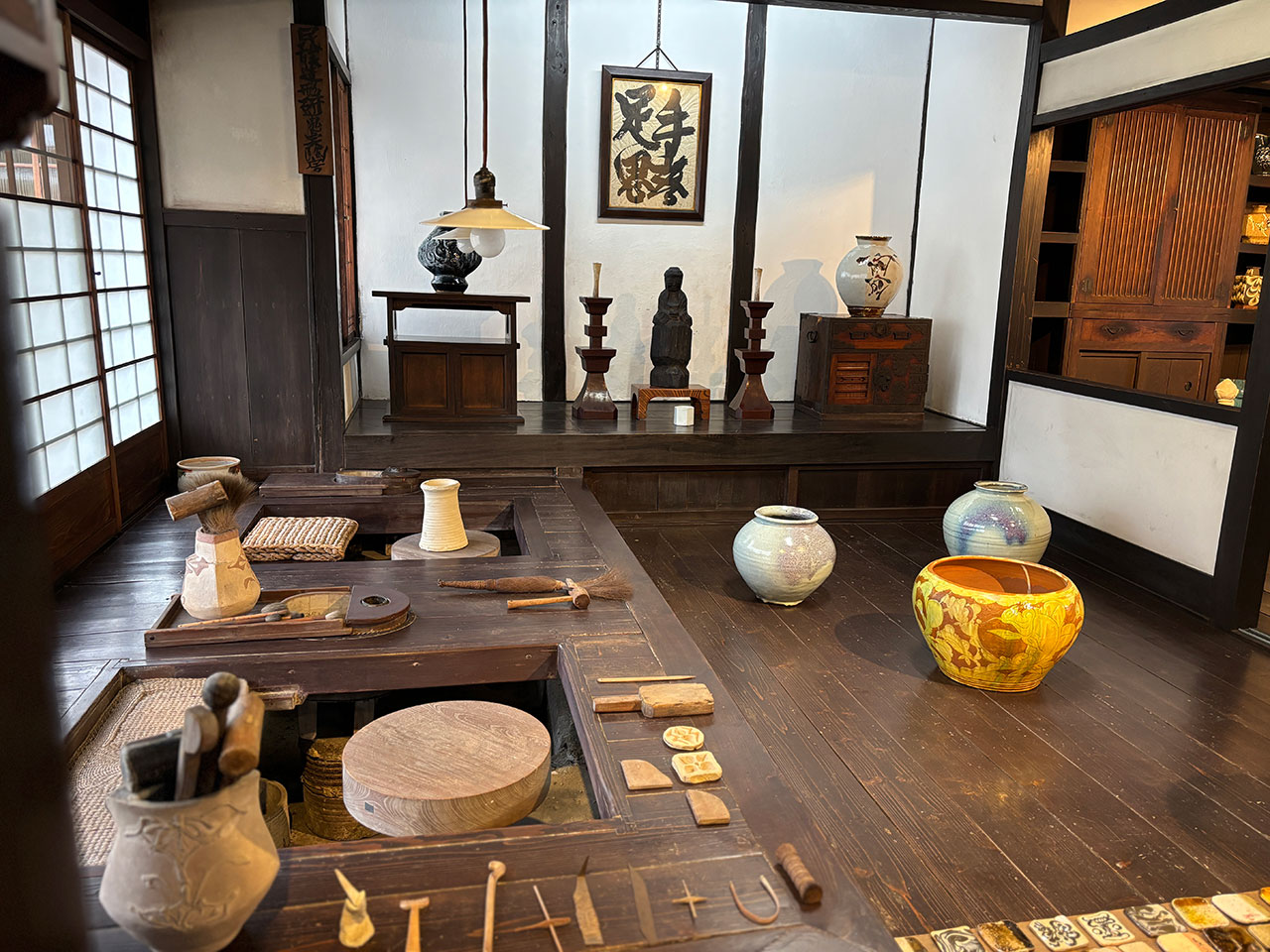
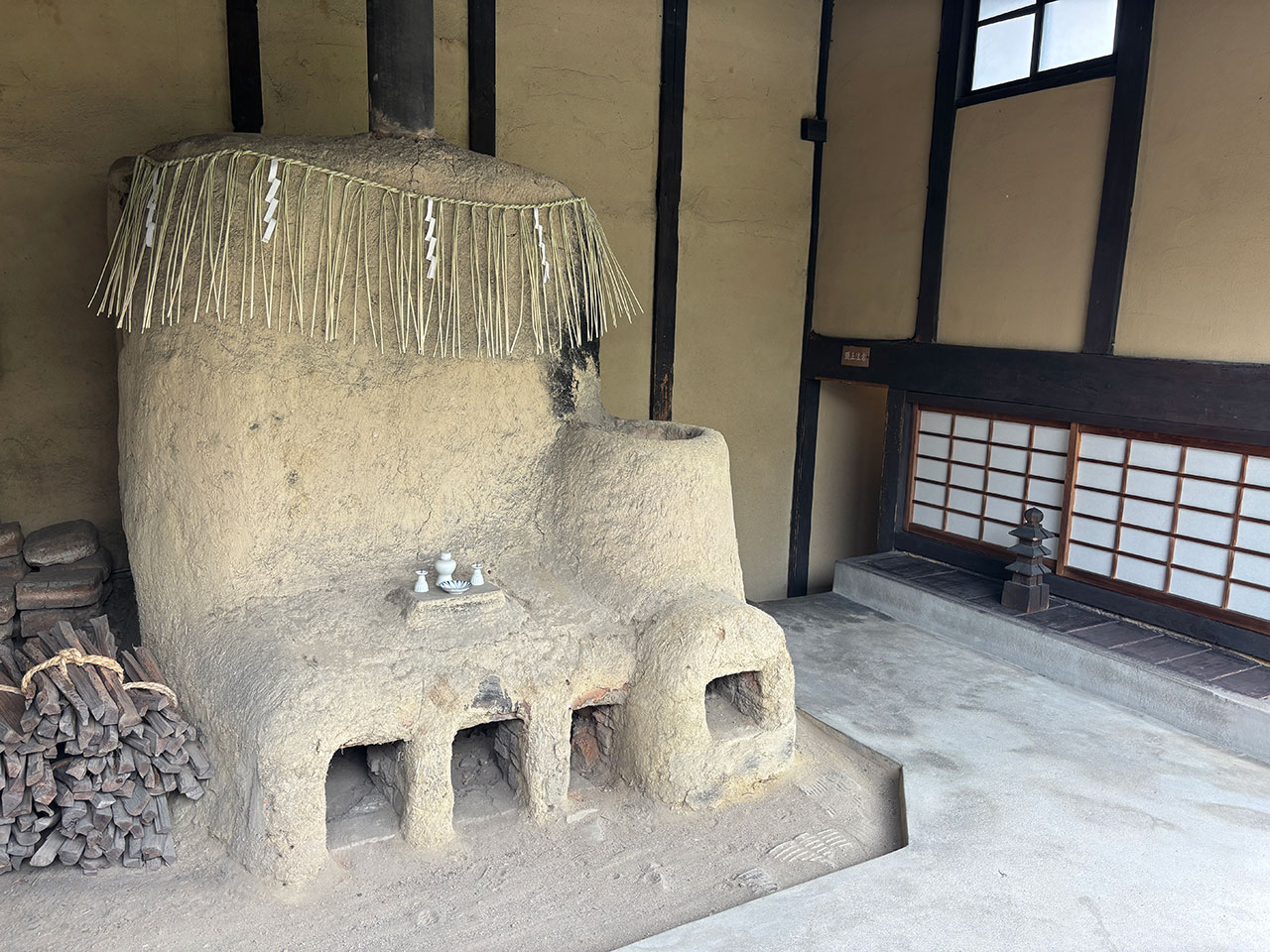
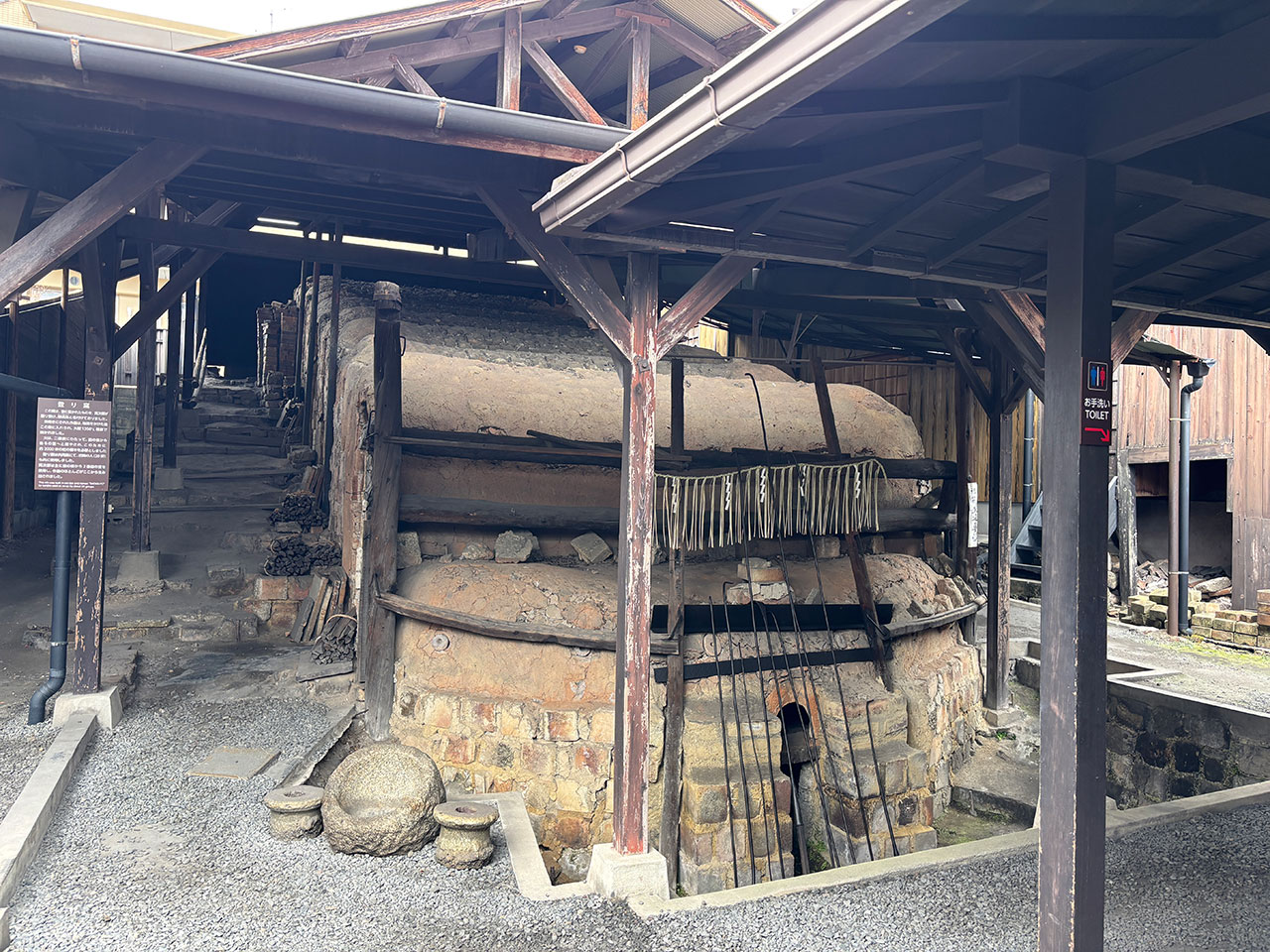
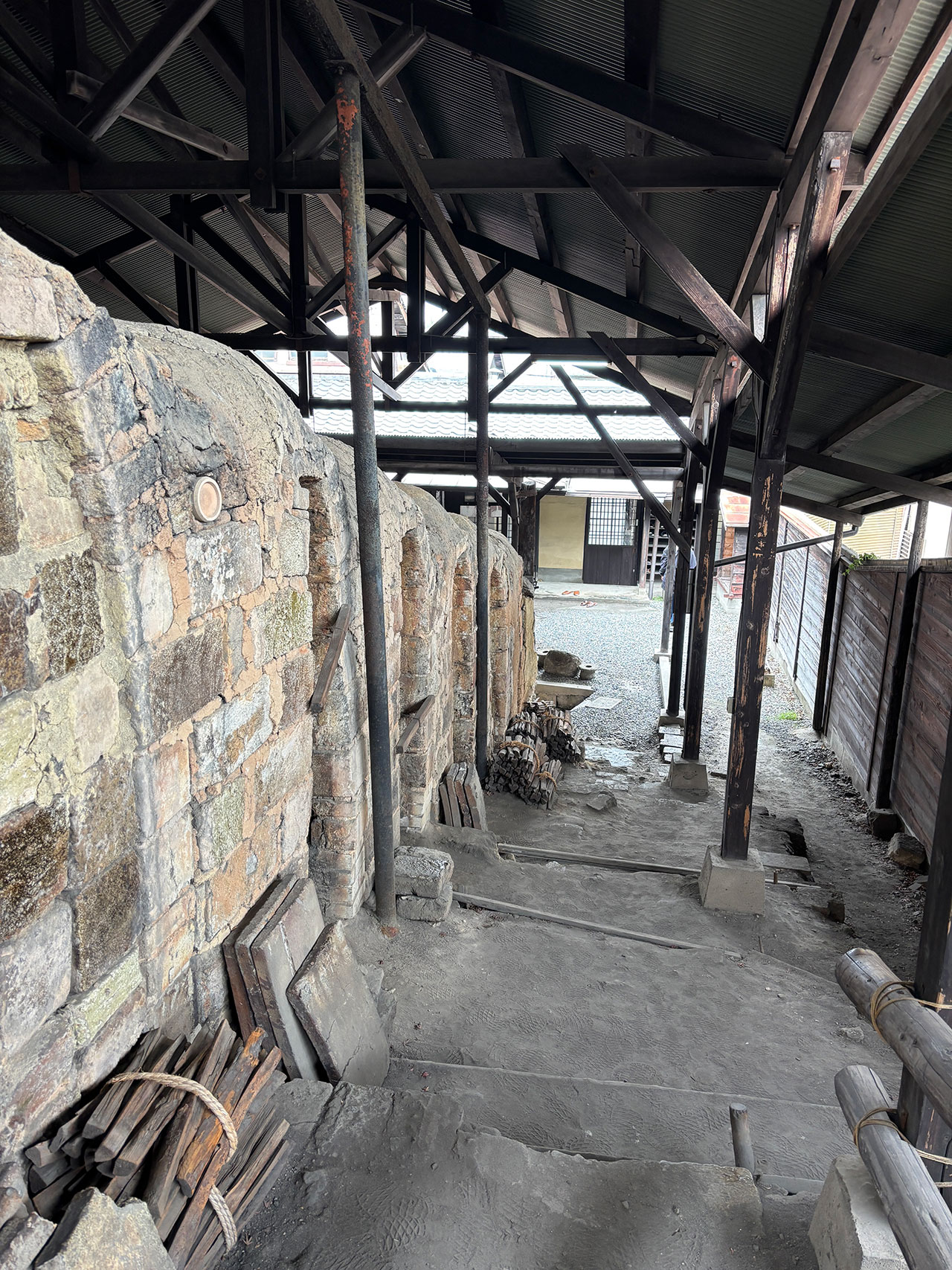
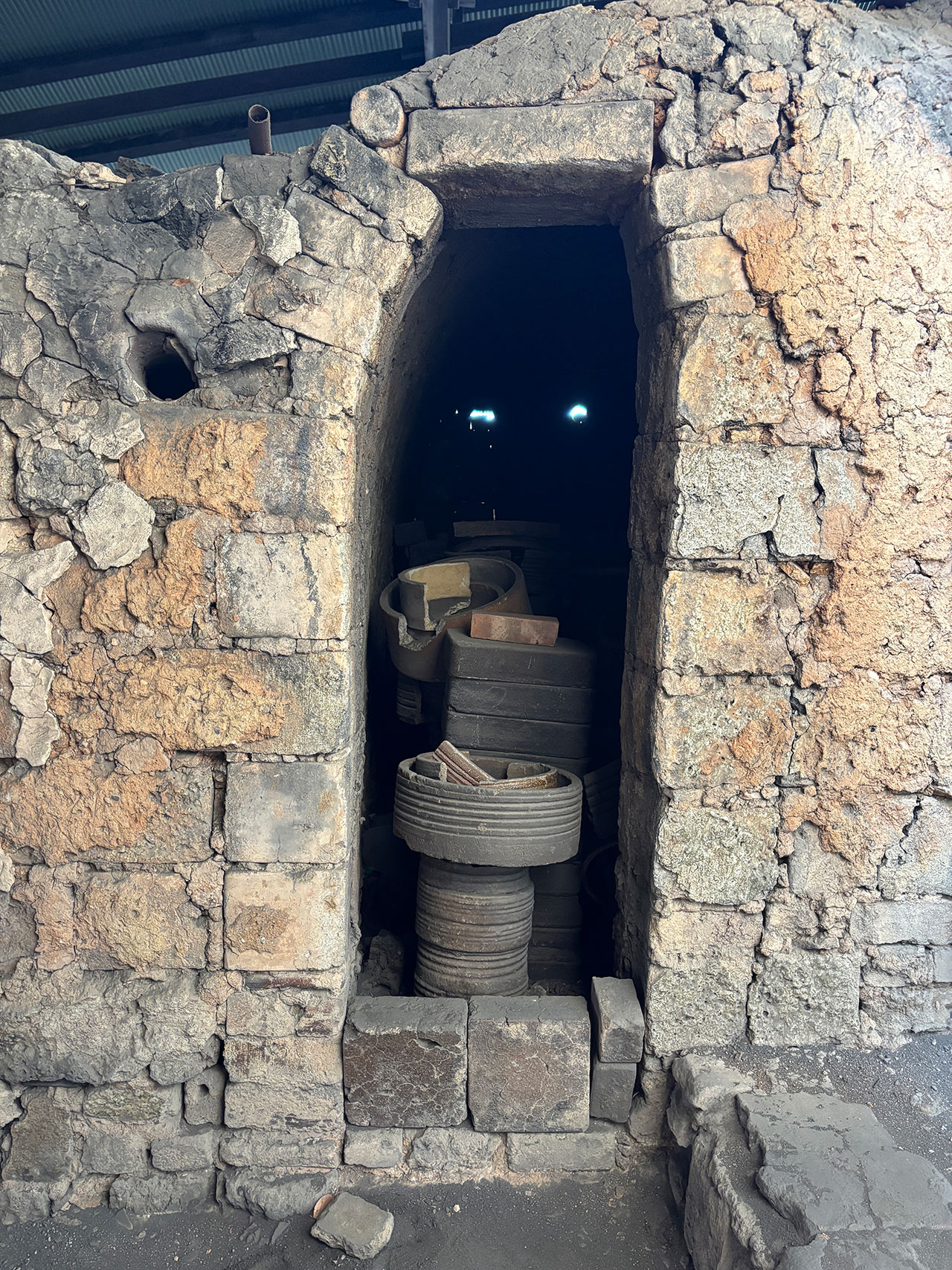
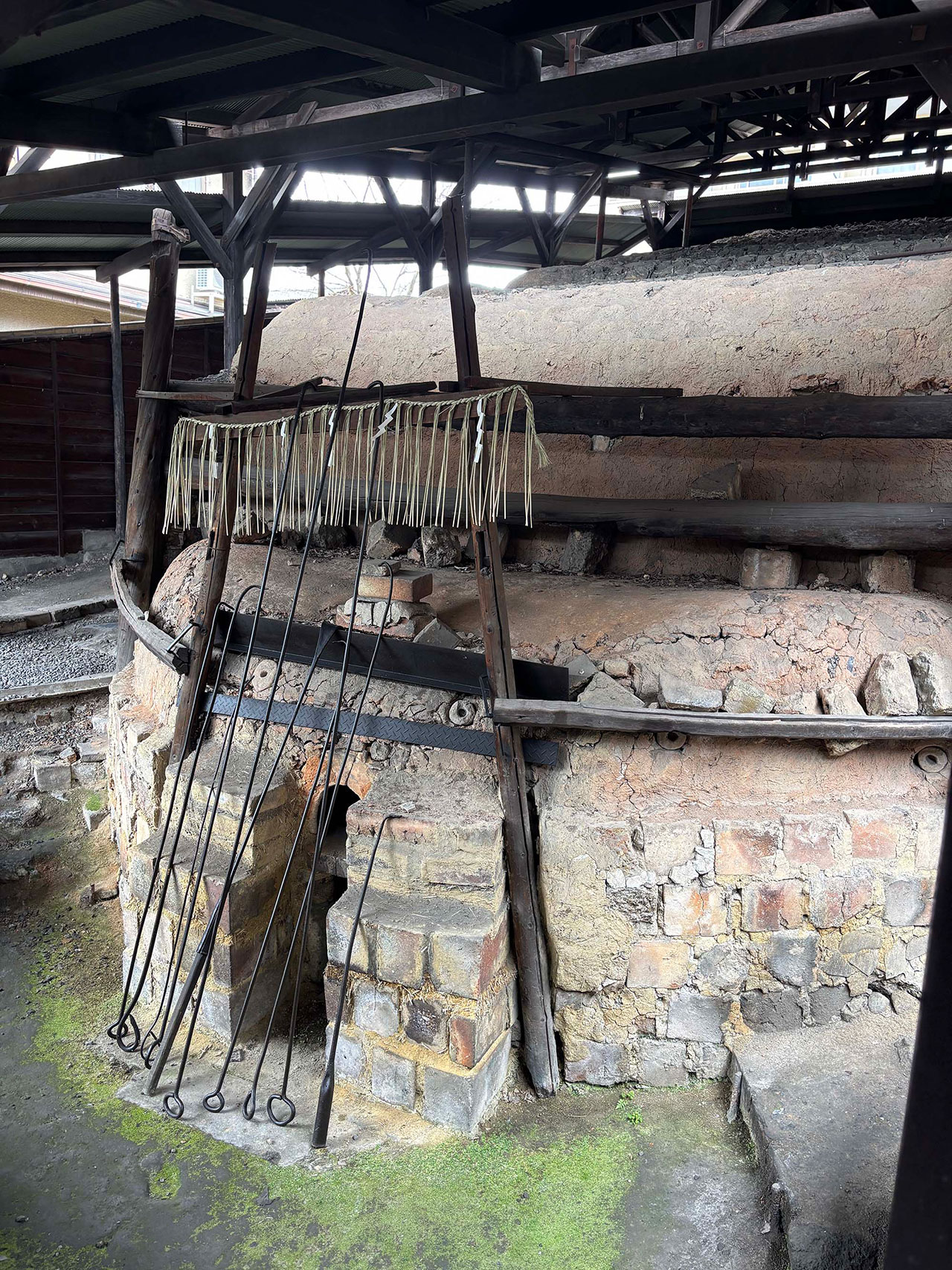
The interior of the home offers about as much explanation as the exterior. In the folk tradition of anonymity and embracing the unknown, few signs exist — in Japanese or English — to tell you where to go or what you are looking at. You are entering someone’s home, after all, and while you will find a few expected museum displays and exhibition labels throughout the two floors, I can imagine that the overall experience of the house is much the same as when the artist lived, worked, and fired his massive eight-chamber noborigama climbing kiln here from 1937 until his death in 1966.
Who Was Kawai Kanjirō?
Kanjirō is best known for his role in establishing Japan’s mingei, or folk art, movement alongside his friends, philosopher and art critic Sōetsu Yanagi, potter Shōji Hamada, and British studio potter Bernard Leach, who helped translate and disseminate the movement’s work and philosophies to Western audiences. Largely considered a reaction to Japan’s rapid post-Meiji Restoration modernization, mingei — or “art of the people” — established a new standard of beauty that its founders believed could only be located in the utilitarian, everyday objects made by Japan’s ordinary, often anonymous craftspeople, rather than by renowned individual artists or master craftsmen.
I received my introduction to the mingei movement through Western art academies, including a brief stint working at the Alfred Ceramic Art Museum, where I physically handled and helped catalog many jewels of studio pottery movements worldwide. But I did not learn about Kawai Kanjirō until I visited his home in Kyoto last March. This was not because he was less productive than his counterparts or somehow less influential to the mingei movement, but likely because Kanjirō himself never set foot inside the United States during his lifetime, nor did he ever exhibit work in the country. In fact, most of his pieces have never left Japan — until now, exactly 100 years after the movement was conceived.
For the first time, Japan Society in New York presents a solo exhibition celebrating the potter and national treasure’s life and work, bringing his private collection of ceramics, woodwork, and calligraphy from his former house in Kyoto to Manhattan’s “Japan House.” Titled Kawai Kanjirō: House to House and on view through May 10, 2026, the exhibition celebrates a milestone international exchange of culture and art.
Mingei, From Kyoto to Manhattan
Curated by Michele Brambling, senior director at Japan Society, and Tamae Sagi, curator of the Kawai Kanjirō House and granddaughter of Kanjirō, House to House explores the artist’s oeuvre through the lens of his home, which the curators describe as his “largest and most comprehensive creative work.” Designed by Kanjirō himself and built by his brother, a master carpenter, the house remains a living example of the mingei movement.
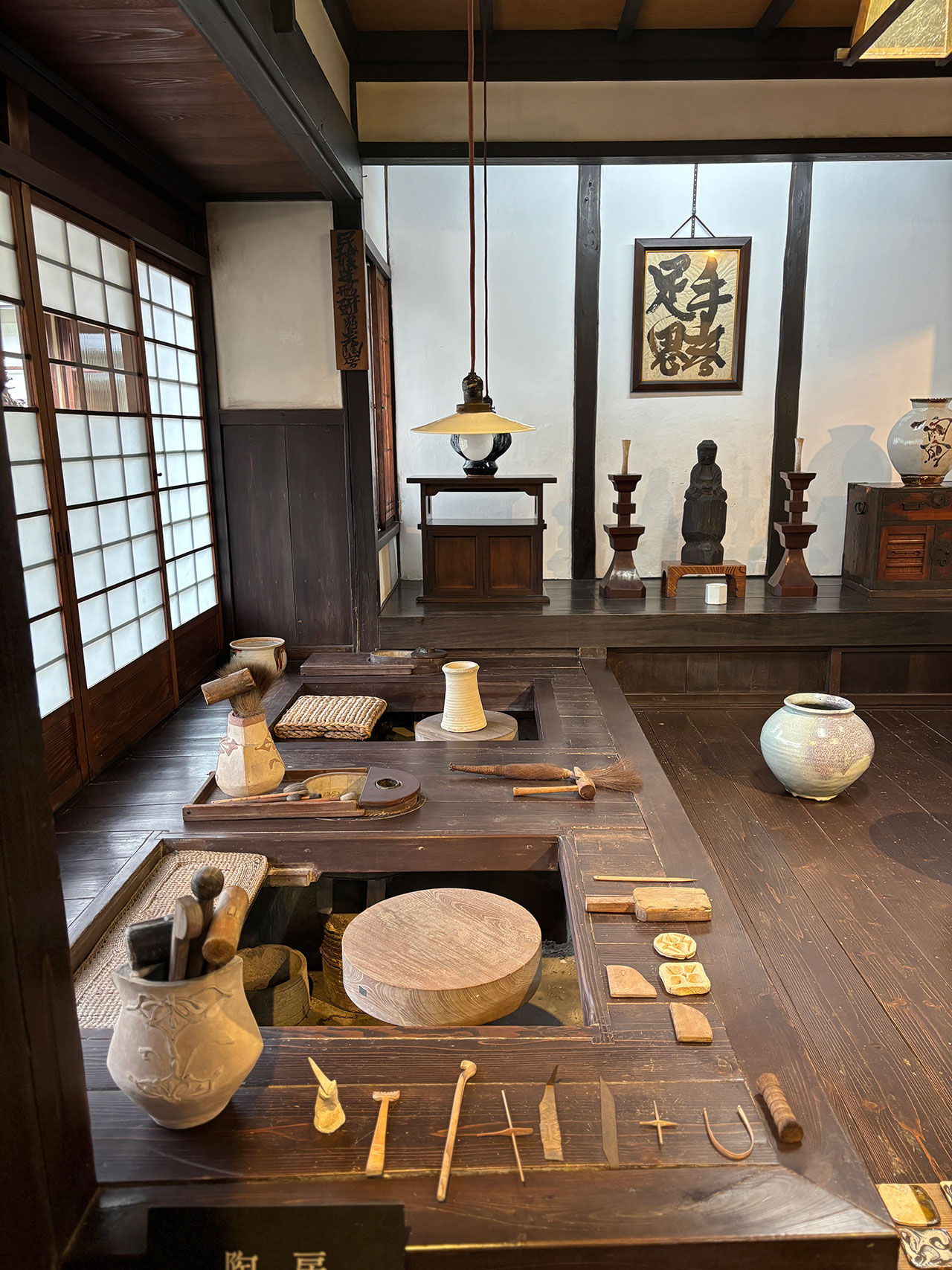
“From the outside, one could never guess what a vast storehouse of art lies beyond the door,” friend and Japanese American writer Yoshiko Uchida wrote in 1953, in an essay excerpted in We Do Not Work Alone, the slim, copper-colored volume that can be purchased at the museum in Kyoto and at Japan Society. Today, the same is true: stepping into the house feels like entering a time capsule of 20th-century Japanese craft. When exploring its grounds, one can feel the artist’s emphasis on the importance of everyday objects.
“One is immediately impressed by [the house’s] massiveness and sturdiness,” wrote Uchida. “There is nothing flimsy or unstable about it.” Japan Society evokes this sentiment through the display of a large section drawing that shows the mechanics of the home, alongside a wall of perspective sketches and photographs of the house’s interior made in situ by the Rome-based exhibition designers Milk Train.
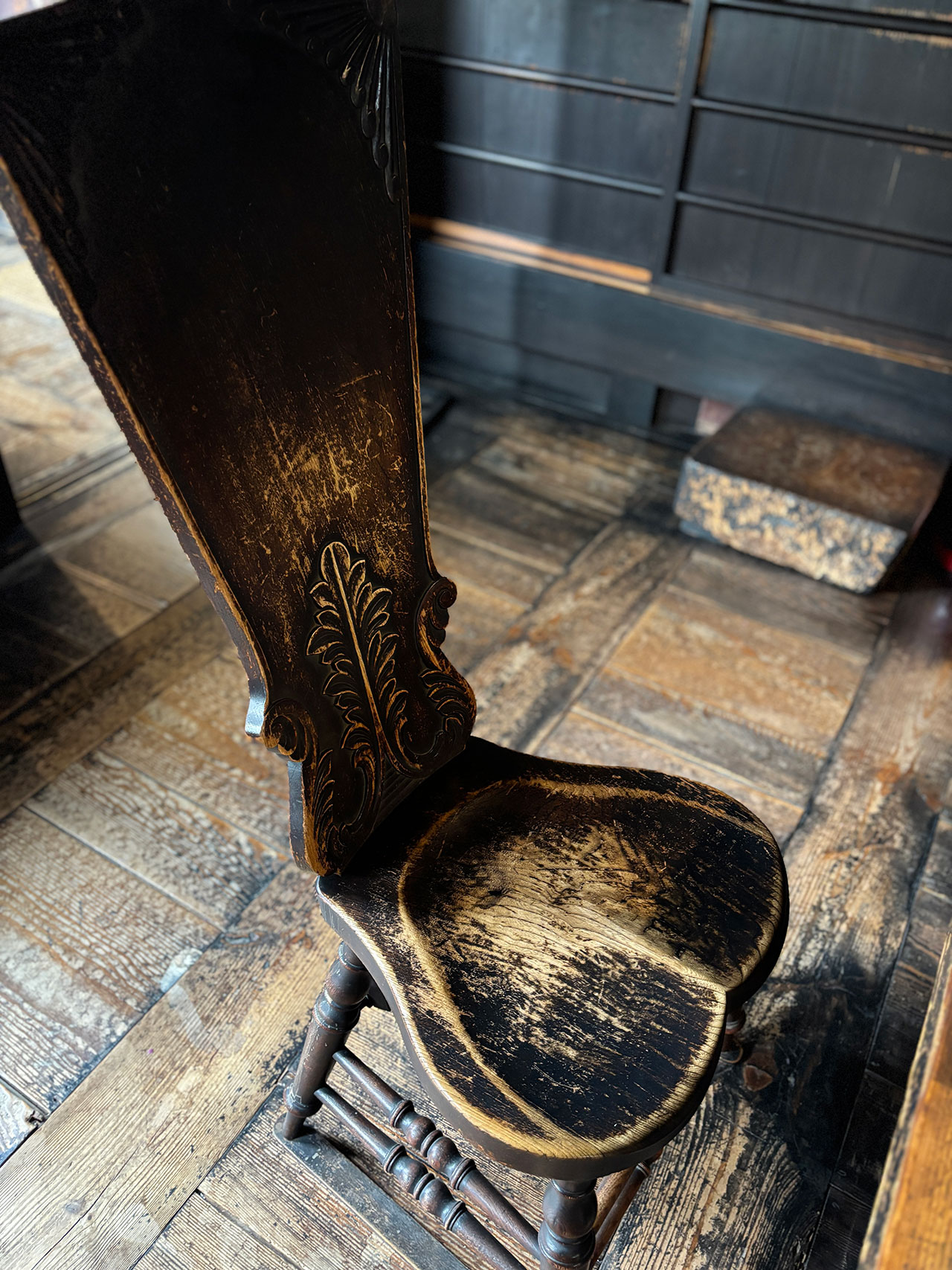
These prints highlight not only the building’s architecture, but also the trove of furniture and objects one can find throughout the house: a bamboo stool that transforms into a child’s chair when turned sideways, barrel-shaped straw stools, squat chairs made from old wooden mortars once used for pounding rice, an alcove desk, and his two potter’s wheels — most of which were designed and made by Kanjirō himself. The drawing even depicts the friendly tortoiseshell house cat that greeted me during my visit, patiently sitting through visitor photoshoots and mewing at me to let her back into the house when I re-entered from the courtyard kiln area.
Japan Society’s main gallery presents Kanjirō’s ceramics chronologically, from his earlier Chinese- and Korean-inspired works to his later, more abstract and asymmetrical vessels, splashed with his signature hand-mixed copper, iron, and cobalt glazes. The final room is dedicated to the artist’s experimental late-career wooden sculptures and masks, which echo the same motifs as his ceramics: hands pointing to the sky, figures from Japanese folklore, and, of course, cats.
The white display tables and cases throughout the galleries were designed to evoke the joinery of the Kyoto home’s construction, while their varied heights allude to the different levels at which works are arranged throughout the home’s interior. On the walls surrounding the tables, visitors encounter a selection of Kanjirō’s 1960s calligraphy: poems that read as Zen meditations. One, in particular, stands out: “The eyes hear; the ears see.”
Evoking a Buddhist Standard of Beauty
The difference between seeing and knowing underscores the mingei movement, emphasizing its strong ties to Japanese Buddhism. To best “see” Kawai Kanjirō’s work, perhaps we should heed the words of his dear collaborator and fellow founder of the Japan Folk Crafts Museum, Sōetsu Yanagi.
In his 1940 essay “Seeing and Knowing,” Yanagi wrote: “First, put aside the desire to judge immediately; acquire the habit of just looking. Second, do not treat the object as an object for the intellect. Third, just be ready to receive, passively, without interposing yourself.” He continues, “If you can void your mind of all intellectualization, like a clear mirror that simply reflects, all the better.” For Yanagi, this “non-conceptualization,” or the Zen state of mushin — “no mind” — “springs the true ability to contact things directly and positively.”
For Kanjirō, “God” and “Buddha” were simply labels for the unknown force bigger than us all, what the artist called “The Unknown Self.” The artist told Uchida, “The unknown self is revealed through the work of the hands and the body, and it is that unconscious element in every man that prods him on to new achievements.” He believed that anyone can practice the art of making beautiful things, and that the unknown self is always the force that drives a person’s actions forward.
This belief in beauty as truth, and in beauty as a means of connecting to the spirit through art, is at the heart of mingei. Yanagi wrote, “Every artist knows that he is engaged in an encounter with infinity, and that work done with heart and hand is ultimately worship of life itself.” The writings of Yanagi and the works of Kanjirō show us that not only is there no distinction between truth and beauty, but there is also no difference between fine and applied art. The great ceramicist Bernard Leach, a close friend of the mingei movement, described this breaking down of distinctions as “perhaps Japan’s greatest contribution to world culture.”
Craft in the Face of the Unknown
What Leach did for Yanagi’s texts — translating and presenting them “so that the western world may penetrate that which Buddhism contains for the seeker looking for the meaning of beauty in the face of truth” — is also what Japan Society is doing for contemporary viewers of Kanjirō’s life’s work today.
While the artist died 60 years ago, the underlying themes of his work highlight the very nature of human life and creation — themes that were relevant during the rapid, machine-driven industrialization of the 20th century and remain so today, in our present age, as every aspect of society is increasingly infiltrated by machine learning and artificial intelligence. The mingei sentiment — that every ordinary person has the ability and agency to produce beautiful, truthful objects with their own hands — echoes a statement I hear independent artists and craftspeople saying a lot today: it is better to make bad art than generate AI “art.”
In his writing, Yanagi articulated the belief that “fundamentally, human beings, Eastern or Western, need belief, free play of imagination, and intuition in their homes and workshops or they become starved. All of the cog wheels and electronic brains cannot assuage these human needs in the long run.” There is no better example of an imaginative, intuitive art and design practice than that of Kawai Kanjirō.
Kanjirō’s work, and the broader context of mingei, are living reminders of what it means to be human, and I think people are craving more of those reminders right now. As a whole, Japan Society’s Kawai Kanjirō: House to House stands as a generous offering and a reminder of what it looks like to create with, and find beauty in, the work of humanity’s first tools: the hands.
Elsewhere in Japan, Kawai Kanjirō and Shōji Hamada, a concurrent exhibition, is on view at Tokyo’s Japan Folk Crafts Museum, the institution the two potters helped establish with Yanagi 90 years ago, in 1936. And in Japan Society’s central gallery, visitors can watch an excerpt from film footage chronicling the making of the exhibition through the words of Kanjirō’s granddaughter and co-curator. Visitors are encouraged to donate to fundraising efforts so that the curatorial team can continue creating a feature-length film that will further spread the message of mingei and Kanjirō’s legacy to audiences beyond New York and Japan.
Just as the mingei founders had no real way of knowing the long-term effects of industrialization on their craft, today’s artists and designers cannot fully begin to comprehend the effects of machine learning on our work and industry. Maybe a Zen mindset is the best approach here. As Kanjirō said, “There is excitement and stimulation in not understanding a thing completely. The unknown is fascinating.”
Photography courtesy of Jaxson Stone.
