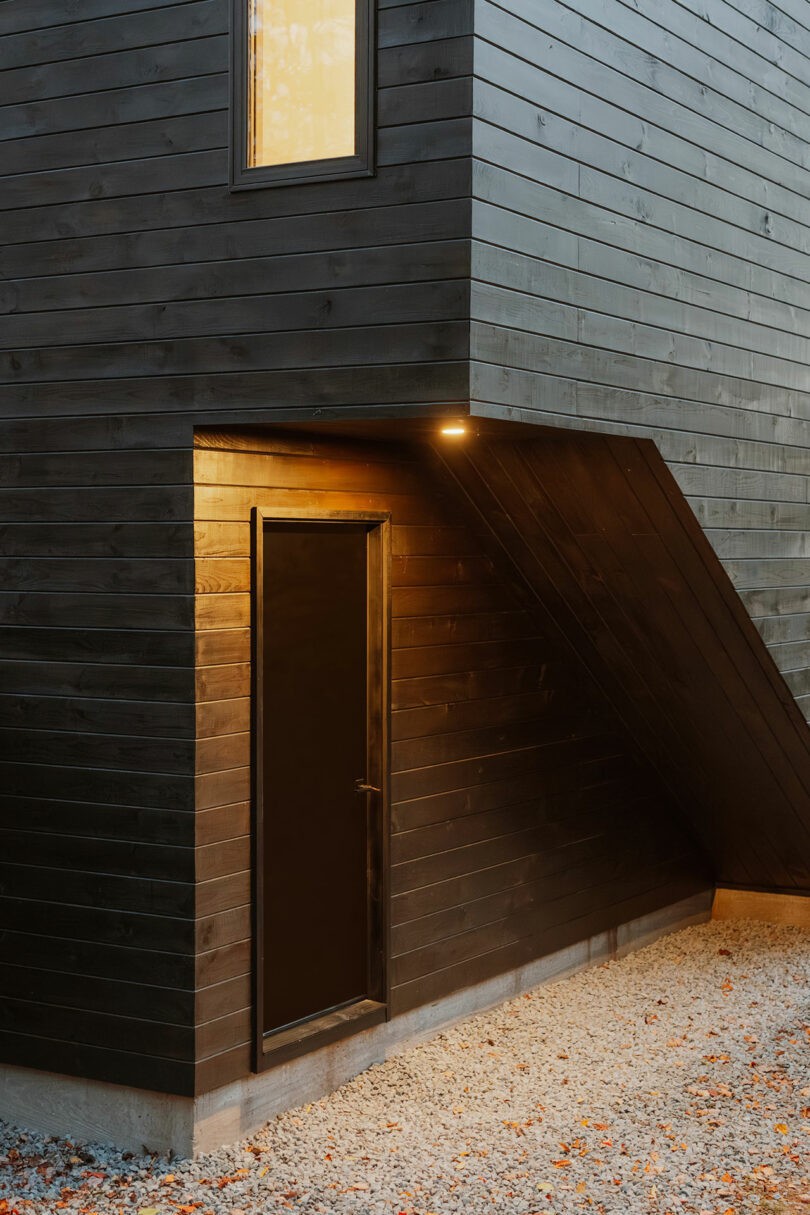
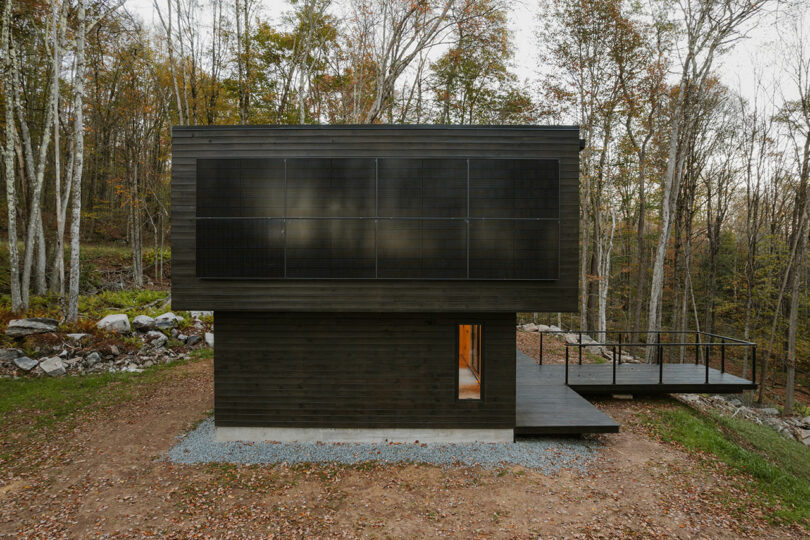
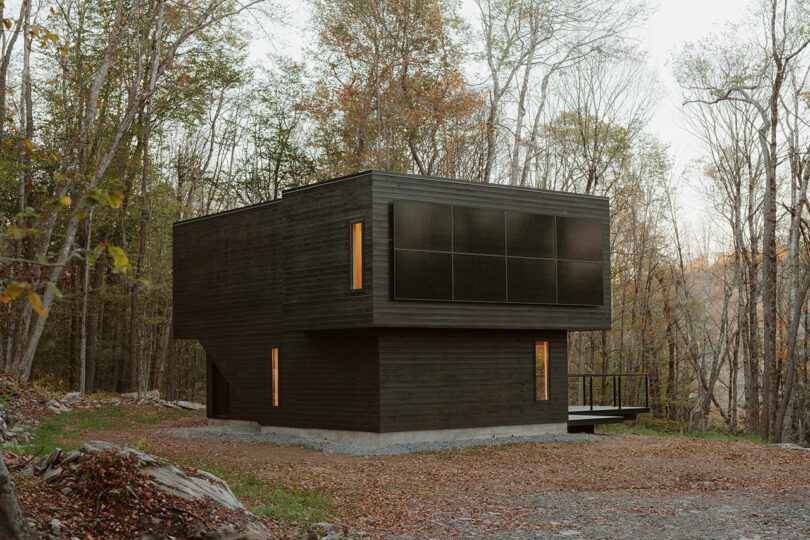
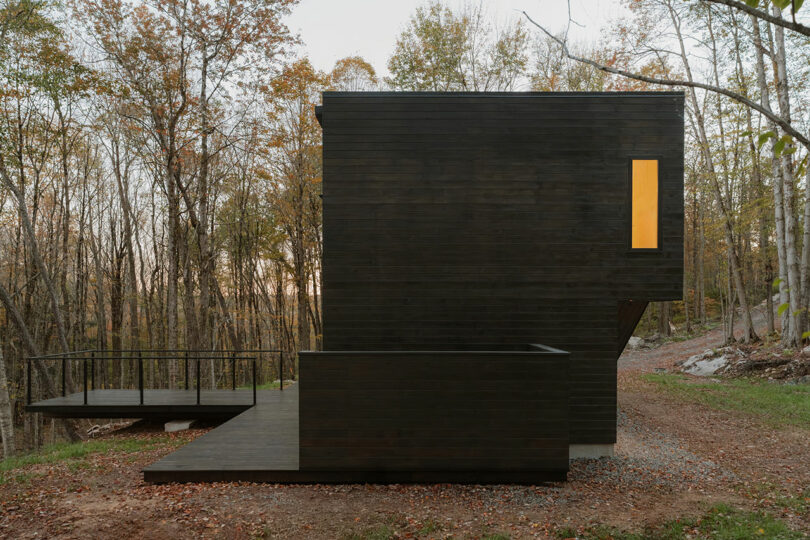
There is no mistaking the core philosophy of the Forest Edge House, a 1,500-square-foot home nestled into the woods of the western Catskill Mountains. On the southern face of the house, a grid of solar panels absorbs the slanting rays of the sun, gleaming softly against dark pine cladding. There is a sense of quiet power to this little black box of a home—sited on a 3-acre forested parcel and set along a gentle slope—and that’s entirely by intention.
Forest Edge House is the fifth in a series of solar-powered homes designed by Marc Thorpe and built through Edifice Upstate, the design-and-build agency he cofounded with partner Claire Pijoulat. Each project in the series has been an exercise in restraint and self-reliance, offering what the team describes as a turnkey model for contemporary living that integrates sustainable technology at its core.
More than a formal language, it is a worldview—one that positions architecture as a means of reclaiming autonomy in an increasingly outsourced existence. As Thorpe puts it, “the system is eroding our individuality by outsourcing every aspect of our lives that enables our sense of purpose and ability to construct meaning.” The first step in taking that back, he argues, is energy independence.
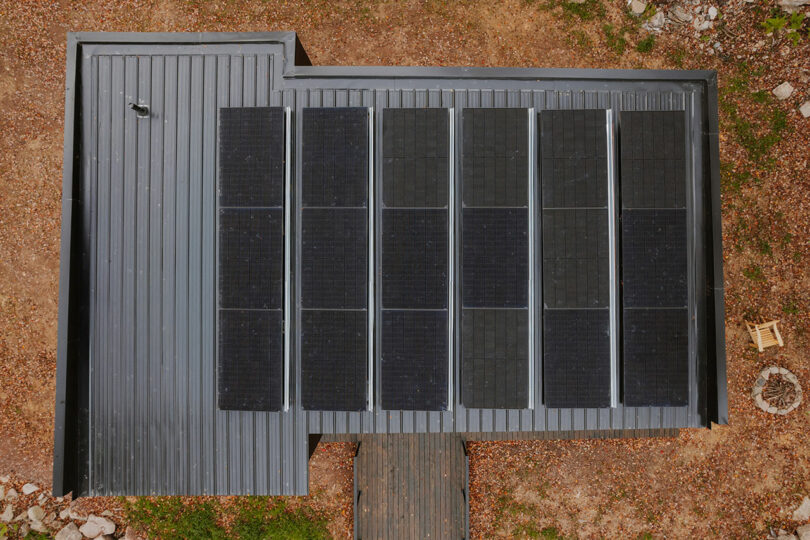
The panels on the facade—24 monocrystalline units—along with an additional rooftop array, generate approximately 38 kWh of electricity per day. This infrastructure expressed, part of what Thorpe describes as “descriptive function,” where the building communicates its purpose through its form.
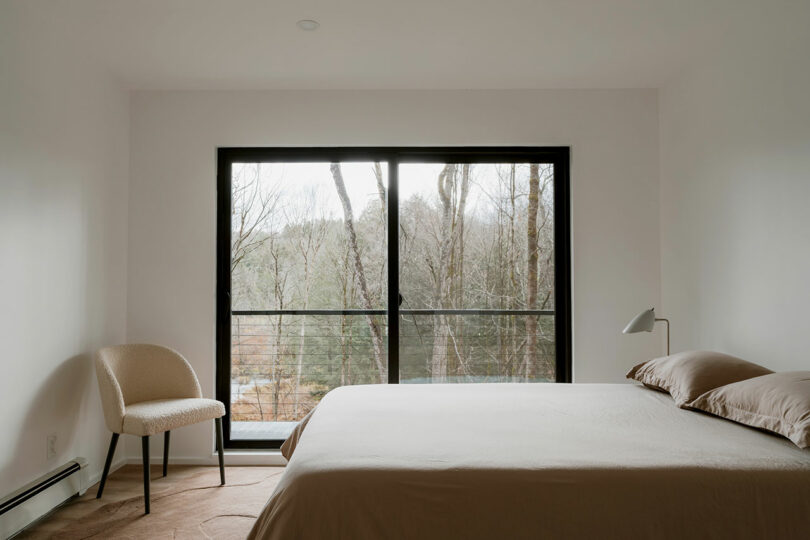
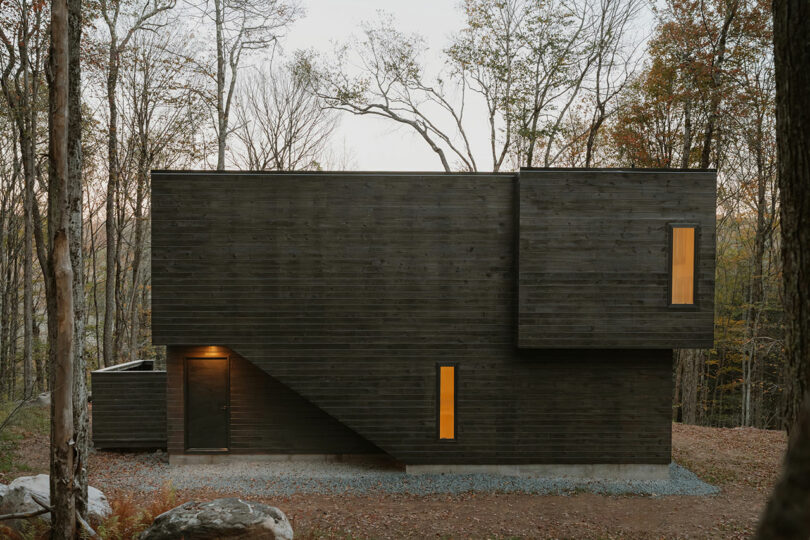
The house is oriented and shaped by the sun, its architecture a direct byproduct of environmental forces and use. “Nothing that exists on or within the building is decorative,” he notes. “Windows are positioned to frame views as well as provide cross ventilation, interior program and physical circulation are expressed on the facade, overhangs provide shade where required.” In this way, the home draws from the region’s agrarian vernacular, where form follows necessity, without slipping into campiness.
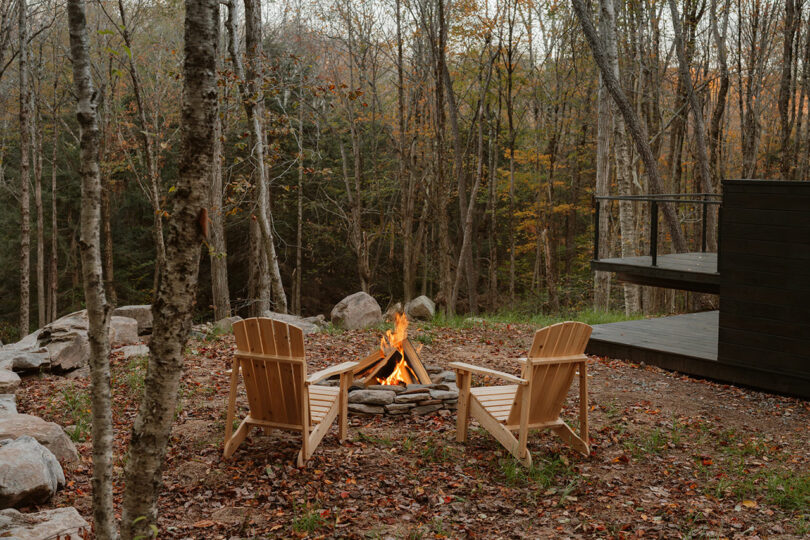
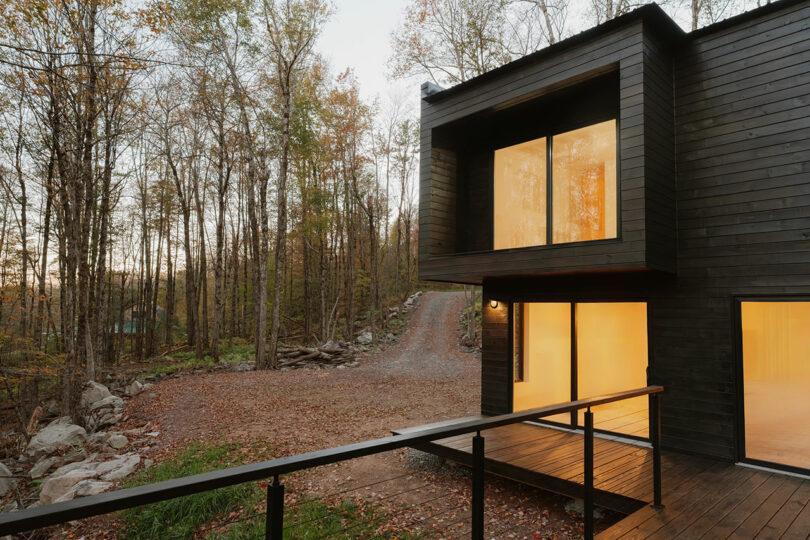
A 25-foot cantilevered deck in black steel extends into the canopy of the trees outside, a singular expression of outreach in an otherwise introspective building, dissolving into the landscape rather than imposing upon it.
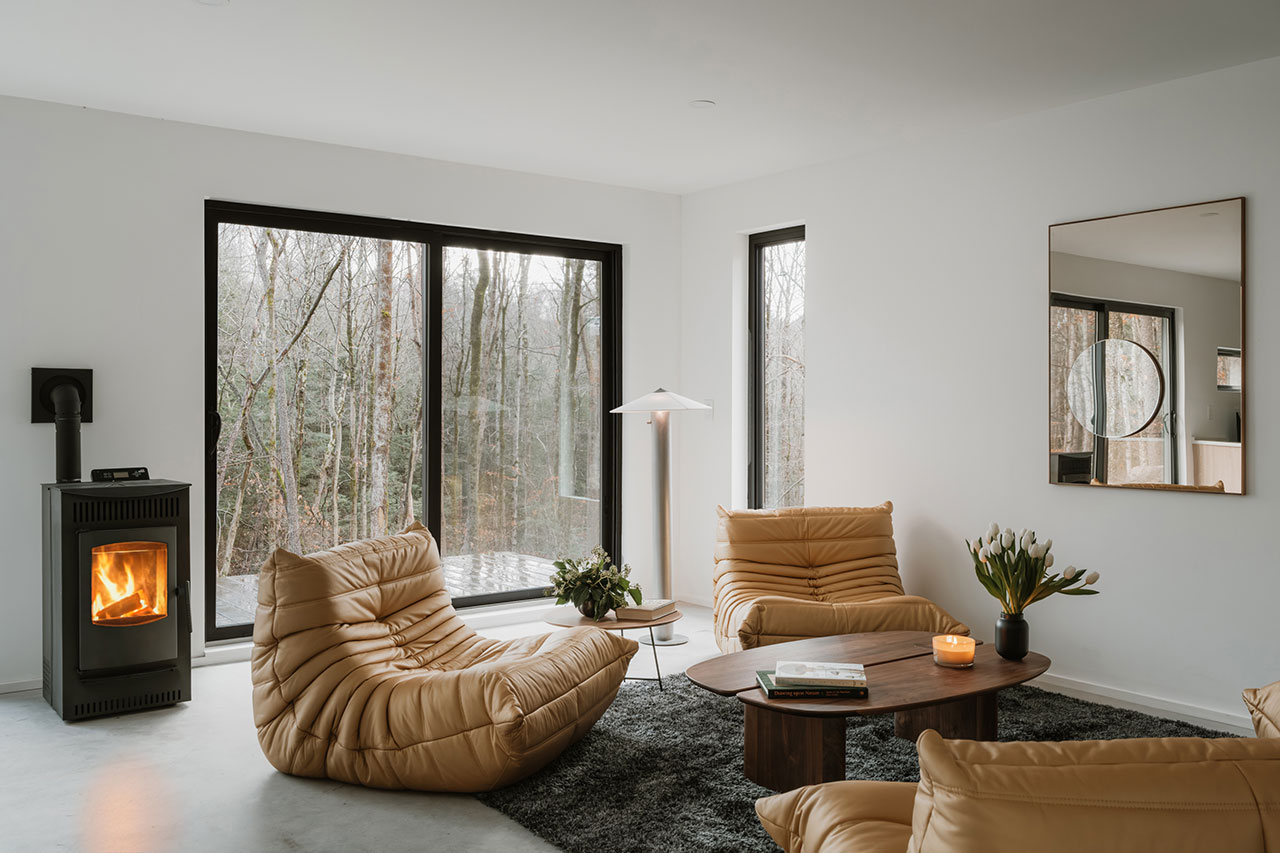
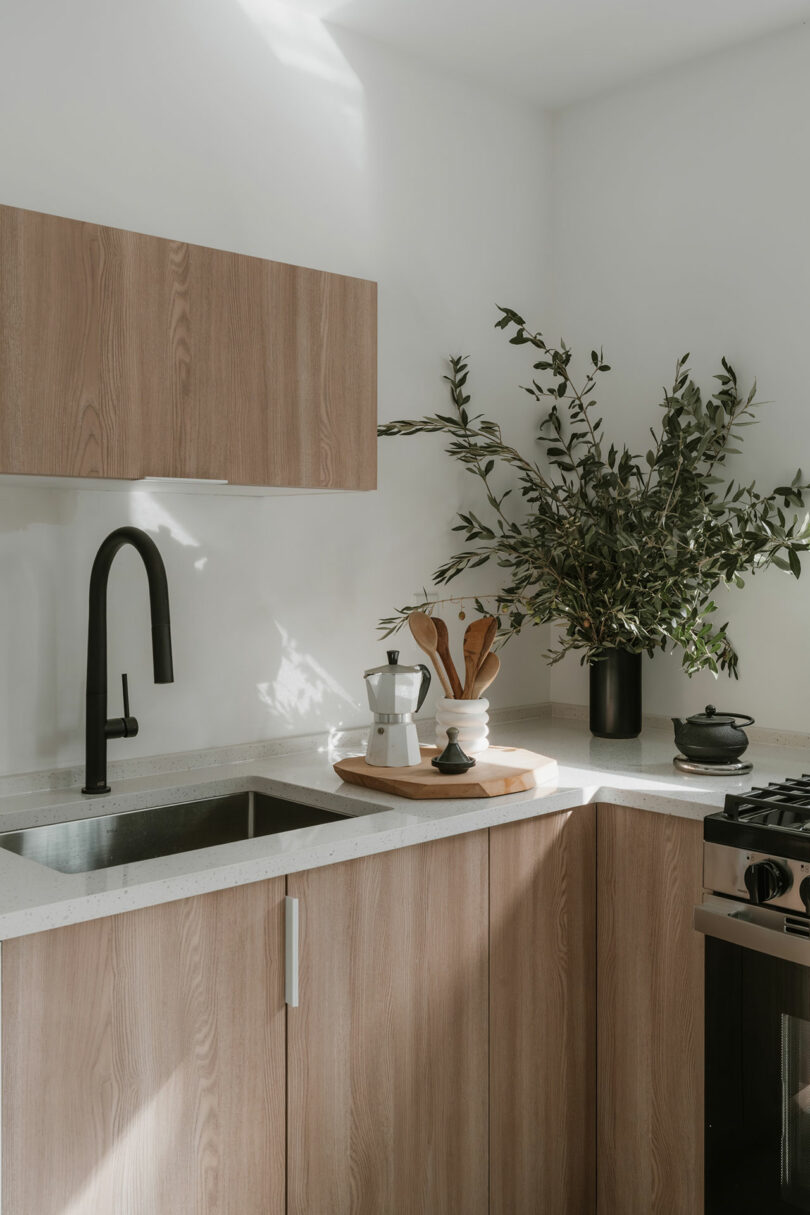
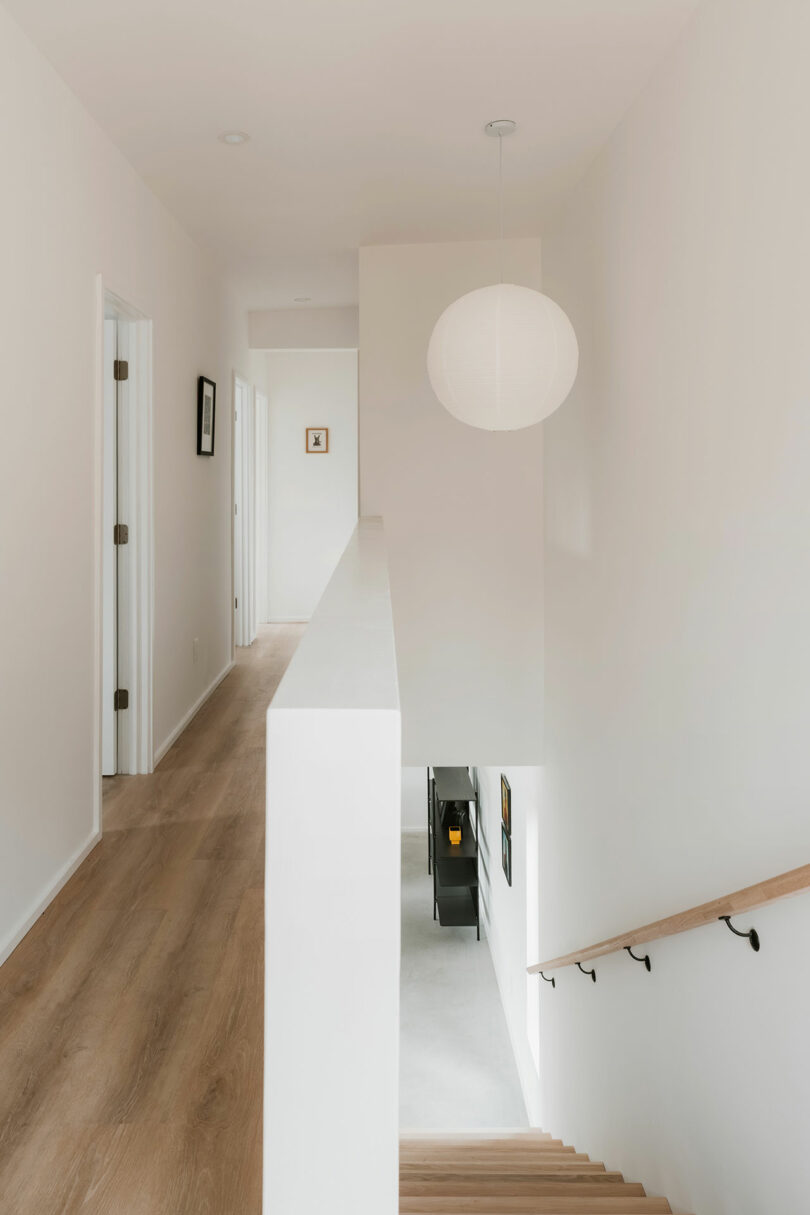
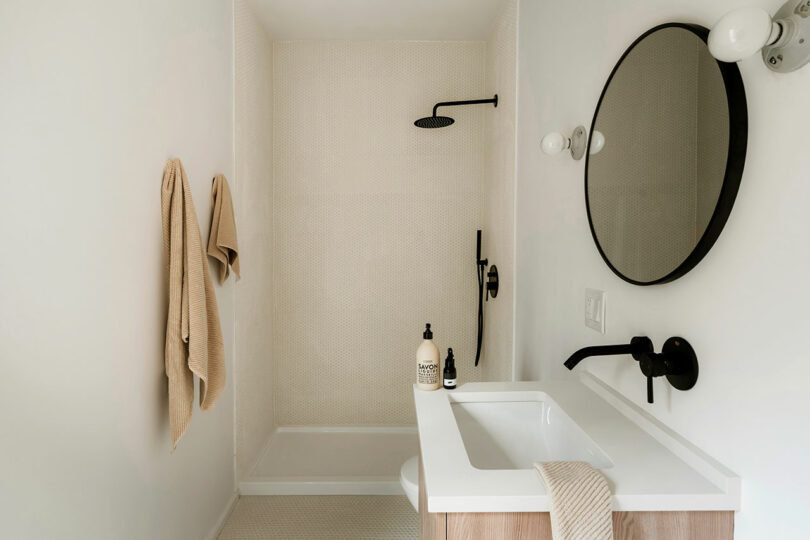
Inside, the home is light-filled, airy, and deliberately composed, featuring fixtures from French brand Ligne Roset— a longtime collaborator of Thorpe and Pijoulat, aligned with the project’s environmental and design ethos. An open-plan living, kitchen, and dining area occupies the ground floor, supported by full-floor radiant heating, while private bedrooms are arranged above, establishing a clear programmatic split between collective and individual space. The starkness of white surfaces and black fixtures is alleviated by touches of natural materials—tan leather Togo chairs in the living room and wooden floors on the upper level—and, of course, framed views of the trees outside.
“The house is an exercise in Enough,” Thorpe explains. Thorpe explains. With three bedrooms, two full bathrooms, and luxurious finishes, it doesn’t stint on creature comforts despite being compact. That ethos extends beyond plan and program into daily ritual. The solar energy system—the panels, a 15K Sol-Ark inverter, and Lithium Ion LifePo battery bank—is a daily reminder of the resources it takes to sustain us and a prompt to live within the boundaries of what nature provides. This heightened awareness, Thorpe suggests, reconnects individuals to broader ecological systems: “How much energy am I producing? How much am I consuming? What is my place in this system?”
In this sense, Forest Edge House is a framework for living systemically with its environment through both passive strategies and active technologies. It reflects a belief that architecture, when aligned with natural forces, can transcend the physical to become something more enduring.
“This planet offers us a choice, to be one with nature or not,” Thorpe says. “Designing with sustainable systems is the first step. Humility is what comes after.”
